Difference Between Haploid And Diploid Parthenogenesis. Mar 04 2009 Diploid parthenogenesis is much more common than haploid parthenogenesis and is known in insects such as the gall wasp and also in the roundworms and flukes as well as in various flowering plants such as the dandelion. In haploid parthenogenesis the haploid eggs are not fertilized by the sperms and develop into haploid individuals.
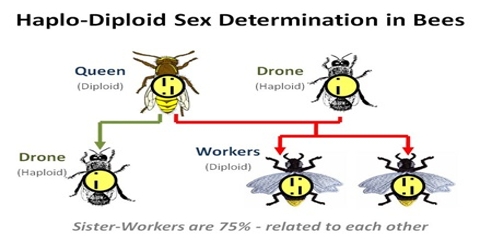
Haploid or monoploid is a cell or organism that has just a single copy of each chromosome. Ploidy is the area of biology that refers to the number of chromosomes in a cell. Parthenogenesis that happens by automixis involves the replication of an egg by meiosis and the transformation of the haploid egg to a diploid cell by chromosome duplication or fusion with a polar body.
Dec 22 2011 The key difference between haploid and diploid is that haploid is the state of having half the usual number of chromosomes while diploid is the state of having the usual number of chromosomes in the genome of a cell.
The cell cycle is the series of events that occur from one cell division to the next cell division. Bisexually produced eggs are often referred to as winter eggs since they have a thick covering that protects the embryo during adverse environmental conditions. Parthenogenesis that happens by automixis involves the replication of an egg by meiosis and the transformation of the haploid egg to a diploid cell by chromosome duplication or fusion with a polar body. Ha refers to a cell only having half the usual amounts of chromosomes one instead of two and di refers to a cell having two sets of chromosomes.
